
In current contexts, behaviors in the workplace have a significant impact on both the working environment and individual performance. Embracing diversity, fostering inclusive behaviors, promoting effective communication, and nurturing a positive work culture are essential for maximizing productivity and achieving organizational success.
Behaviors impact workplace and work performance a great deal. In daily professional life at the workplace, you get together with different people who have unlike educational, professional, and family backgrounds. In a diversified workplace environment, employees meet with workers and customers from cultures, languages, dialects, ethnicities, and habitats.
Conversely, starting from how an employee, colleague, boss, or subordinate converse with others, to the moods, feelings, and disposition in tasks’ performance, they shape the workplace outlook, pleasant or unpleasant work environments, and impact the workplace in terms of organizational performance.
furthermore it would be effect your health long-term.
What is Behavior in the Workplace?
Basic Assumptions of Organizational Behavior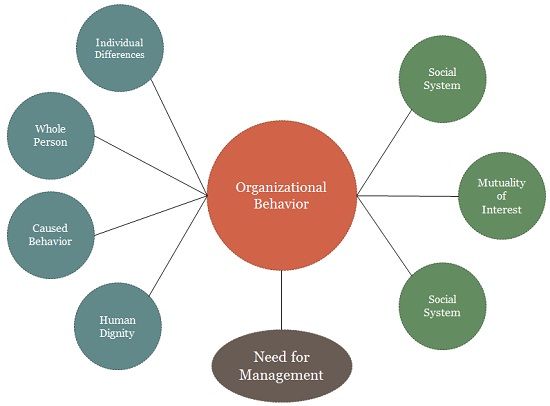
- Individual Differences: It is a universally accepted fact that ‘No two individuals are alike and so does their behavior, in a particular work situation’. Every person is different from another in their approach, attitude, personality, traits, intelligence, competency, etc.
- Whole Person: When a person gets appointed in an organization, it is not just their skills which get hired, rather their social background, their likes and dislikes, habits and hobbies are also hired.
- Caused Behavior: It should be noted that the behavior of the employee is caused, i.e. influenced and not random. This influenced behavior is due to the person, to whom the employee believes, as per his/her interest.
- Human Dignity: This assumption states that the individuals working in the organization are to be treated differently from the rest of the means of production, i.e. every individual must be treated rightfully and with due respect
- Social system: Organizations are social systems, and so the activities carried out in an organization are regulated by social and psychological principles and laws. As individuals have psychological needs, organizations also have social roles and status. Basically both formal and informal social system exists in an organization together.
- Mutuality of interests: It is not just the employees who need employment, rather organizations also need people to work for its survival, growth and expansion, so both have mutual interest. As employees see organizations as a means to earn money for their services and reach their goals, the organization also needs people to achieve the organizational goals, timely, smoothly and effectively. Absence of mutuality of interest will make no sense to hire people and develop cooperation, as there would be no shared interest.
- Holistic concept: If you put the above six basic assumptions together, a comprehensive concept will evolve, which explains a people-organization relationship with regard to the whole person, group, organization, and social system. It covers the all-inclusive picture of people working in an organization in an attempt to consider the maximum number of factors which influence the behavior of people in the organization.
- Need for management: Knowledge about organizational behavior and the factors influencing it would be helpful to the management to attain the ultimate goals of the organization in an effective and efficient manner. In this way managers play a key role in planning, organizing, staffing, directing, controlling and coordinating.
Behavior at the workplace means how an employee behaves when at work with colleagues. The behaviors, positive or negative, define a personality and work ways consequently affecting the task output in particular and employees' performance in general perspective.
It is more formal than being casual with friends due to the appropriateness of the conversations required as per the job descriptions. For example: a lawyer’s behaviors and dealings with clientele and colleagues would be different from an employee working in the marketing or finance dominion.
Khowaja A.R (2023)
In conclusion, the mood of a supervisor/Manger is a powerful determinant of the office working environment. If the superior's facial impression would be negatively impact on organization timely decisions. By fostering a culture of positivity, support, and open communication, supervisors can enhance morale, productivity, and overall job satisfaction among employees. Recognizing their influence and adopting strategies to promote a positive atmosphere can ultimately contribute to the long-term success of the organization

The passage offers a good overview of workplace behavior, but for an MBA level, it could benefit from a more critical analysis. Consider these points:
ReplyDeleteLimited focus on impact: While it mentions cultural diversity and communication, delve deeper into how behavior shapes team dynamics, negotiation styles, and leadership approaches.
Basic assumptions need application: Instead of just listing assumptions, explore how understanding individual differences can be used in building high-performing teams.
Management needs specifics: Expand on how knowledge of organizational behavior translates to practical management strategies. Can you mention specific techniques for fostering a positive work culture?
Thank
DeleteGood posts, and agree with the comments given by Mahoushadha . I like to add one more thing, you could expand on this by suggesting practical steps employees and managers can take to achieve this, like team-building activities or recognition programs.
ReplyDeleteAppreciated your valuable comment
DeleteUnderstanding behavior is crucial for organizations to foster a positive culture, drive motivation, and achieve peak productivity.
ReplyDeleteYes absolutely
ReplyDelete