Tuesday, April 9, 2024

Hidden benefits on flexible working


Flexible working - giving flexibility over where, when and the hours people work - is increasingly in demand but the number of quality flexible jobs falls well short of that demand. There is an opportunity for employers to do more to provide flexibility for the benefit of all employees and organizations.

 
Flexible work schedules are increasingly popular. Single parents often find them crucial for balancing work and family responsibilities. And for many millennial employees, flexible work schedules provide a way to pursue their careers without surrendering the quality of work life they desire. There are several flexible work schedule options.
·
         Flextime
·
         Compressed workweek
·
         Flexible work schedule
·
         Workplace flexibility


During the COVID-19 pandemic era, both companies and employees have reaped benefits from flexible working arrangements. Employees facing increased living costs have found relief through reduced work-related expenses, while companies have seen operational costs decrease with remote work setups. Flexible working has promoted better work-life balance for employees and enabled companies to access a wider talent pool. Overall, it's been a mutually advantageous shift amidst the pandemic's challenges.
 

The potential benefits of flexible working

Flexible working can lead to direct and indirect business benefits. The direct business benefits include savings on office space, for example, using technological advances to allow remote working and hot desking. Flexible working also allows a better match between business resources and demand, for example serving customers on a 24/7 basis.

Indirect business benefits are achieved through improved employee job satisfaction and wellbeing. Research shows that flexible workers have a higher level of job satisfaction, commitment and are more likely to increase discretionary effort compared to those who do not work flexibly. Flexible working can also reduce absence rates and allows employees to manage disability and long-term health conditions, as well as supporting their mental health and stress, as shown in our Health and wellbeing at work survey.

Flexible working options can also be attractive to employees and new recruits, especially as employee expectations change with regard to their jobs, careers and work-life balance, and demographic changes affect employees’ needs to balance their job with other responsibilities such as caring - see our guide on creating care-friendly workplaces


Flexible work arrangements are the cornerstone of a progressive work environment. Embracing these arrangements isn't just a trend; it's a strategic decision that ensures businesses remain agile, responsive, and attractive in today's competitive landscape. As organizations navigate this paradigm shift, balancing benefits with challenges will pave the way for a thriving, adaptive workplace culture


 Flexible working models are here to stay. It is time to make them work for your workforce. All jobs can flex. This means that organizations can adopt a broader view of flexible working and offer a flex-working strategy that benefits everyone, not just those who work remotely. Despite the opportunities present in this area, our recent Global Talent Trends research revealed a disparity in opinions. Executives are concerned about remote working, but employees see things differently:


Overall, flexible working in modern industries is not just about accommodating employee preferences; it's about fostering a culture of trust, empowerment, and performance. By embracing flexible working arrangements, organizations can attract top talent, enhance employee satisfaction and well-being, and ultimately drive innovation and productivity in today's dynamic business landscape.




References,

Factsheet Flexible working practices Available at             https://www.cipd.org/en/knowledge/factsheets/flexible-working ( Accessed on 24.03.24)

Factsheet/#title4 24.03.2024. dessle .g 13 edition human resource management isbn 13: 978-0-13-266821-7 ( Accessed on 24.03.24)

Flexible-work-arrangements,https://www.linkedin.com/pulse/flexible-work-arrangements-benefits-challenges-fabhr-x5oaf/

The flexible working debate available at https://img1.blogblog.com/img/video_object.png ( Accessed on 24.03.24)

McLennan,.M, Gearing up for the future of flexible work https://www.mercer.com/insights/talent-and-transformation/flexible-working/

Behavior Impact on Performance ?


In current contexts, behaviors in the workplace have a significant impact on both the working environment and individual performance. Embracing diversity, fostering inclusive behaviors, promoting effective communication, and nurturing a positive work culture are essential for maximizing productivity and achieving organizational success.

Behaviors impact workplace and work performance a great deal. In daily professional life at the workplace, you get together with different people who have unlike educational, professional, and family backgrounds. In a diversified workplace environment, employees meet with workers and customers from cultures, languages, dialects, ethnicities, and habitats.

Conversely, starting from how an employee, colleague, boss, or subordinate converse with others, to the moods, feelings, and disposition in tasks’ performance, they shape the workplace outlook, pleasant or unpleasant work environments, and impact the workplace in terms of organizational performance.

furthermore it would be effect your health long-term. 

What is Behavior in the Workplace?

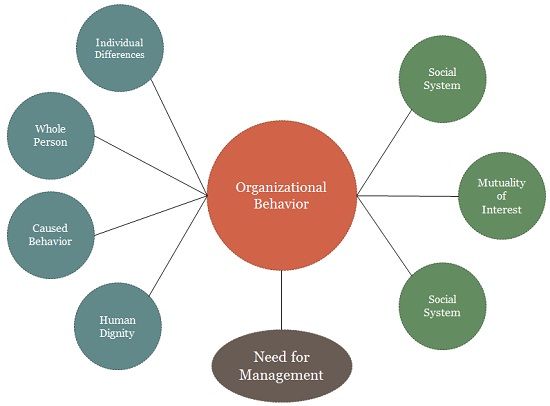
Basic Assumptions of Organizational Behaviorassumptions-of-organizational-behaviour

  • Individual Differences: It is a universally accepted fact that ‘No two individuals are alike and so does their behavior, in a particular work situation’. Every person is different from another in their approach, attitude, personality, traits, intelligence, competency, etc.
  • Whole Person: When a person gets appointed in an organization, it is not just their skills which get hired, rather their social background, their likes and dislikes, habits and hobbies are also hired.
  • Caused Behavior: It should be noted that the behavior of the employee is caused, i.e. influenced and not random. This influenced behavior is due to the person, to whom the employee believes, as per his/her interest.
  • Human Dignity: This assumption states that the individuals working in the organization are to be treated differently from the rest of the means of production, i.e. every individual must be treated rightfully and with due respect
  • Social system: Organizations are social systems, and so the activities carried out in an organization are regulated by social and psychological principles and laws. As individuals have psychological needs, organizations also have social roles and status. Basically both formal and informal social system exists in an organization together.
  • Mutuality of interests: It is not just the employees who need employment, rather organizations also need people to work for its survival, growth and expansion, so both have mutual interest. As employees see organizations as a means to earn money for their services and reach their goals, the organization also needs people to achieve the organizational goals, timely, smoothly and effectively. Absence of mutuality of interest will make no sense to hire people and develop cooperation, as there would be no shared interest.
  • Holistic concept: If you put the above six basic assumptions together, a comprehensive concept will evolve, which explains a people-organization relationship with regard to the whole person, group, organization, and social system. It covers the all-inclusive picture of people working in an organization in an attempt to consider the maximum number of factors which influence the behavior of people in the organization.
  • Need for management: Knowledge about organizational behavior and the factors influencing it would be helpful to the management to attain the ultimate goals of the organization in an effective and efficient manner. In this way managers play a key role in planning, organizing, staffing, directing, controlling and coordinating.
Similarly, the organization consist of individuals working in it and working for it, so it is also influenced by the individuals.

Behavior at the workplace means how an employee behaves when at work with colleagues. The behaviors, positive or negative, define a personality and work ways consequently affecting the task output in particular and employees' performance in general perspective.

It is more formal than being casual with friends due to the appropriateness of the conversations required as per the job descriptions. For example: a lawyer’s behaviors and dealings with clientele and colleagues would be different from an employee working in the marketing or finance dominion. 

Khowaja A.R (2023)

In conclusion, the mood of a supervisor/Manger is a powerful determinant of the office working environment. If the superior's facial impression would be negatively impact on organization timely decisions. By fostering a culture of positivity, support, and open communication, supervisors can enhance morale, productivity, and overall job satisfaction among employees. Recognizing their influence and adopting strategies to promote a positive atmosphere can ultimately contribute to the long-term success of the organization


Reference


        Khowaja A.R (2023) How does Behavior Drive Performance in the Workplace? available                                                     at https://web.hr/blog/behavior-drive-performance (2024.3.26)
        Business jargons ( 2024.3.27) Available at, https://businessjargons.com/organizational-behaviour.html

Saturday, April 6, 2024

Workplace conflicts


A common reason for resignations is the feeling that management in general, or individual managers and team leaders in particular, are not providing the leadership they should, or are treating people unfairly or are bullying their staff (not an uncommon situation). This problem should be remedied by: l selecting managers and team leaders with well-developed leadership qualities; l training them in leadership skills and in methods of resolving conflict and dealing with grievances; l introducing better procedures for handling grievances and disciplinary problems, and training everyone in how to use them. 

Michael.A, (2006),

 By addressing conflicts between employees and supervisors proactively and implementing effective conflict resolution strategies, organizations can promote a positive work environment conducive to productivity, innovation, and growth.

6 Examples of Conflict with Supervisor

1) Unclear Job Roles or Instructions

Whenever the job roles of staff members are unclear, employees are bound to get confused or agitated. Communication is one of the most important skills any supervisor needs. A key part of management is ensuring every employee knows their role and what’s expected of them and supervisors need to be supportive and available if an employee has questions.

When there’s confusion or other negative emotions, it’s only a matter of time before there’s conflict between coworkers or between workers and supervisors. Employees may lash out if they’ve put a lot of work into a project only to find out someone else did the same thing or that they should have been focusing on something different.

2) Micromanagement

Once an employee understands their role, they no longer need to be supervised every minute of the day. Micromanagers that hover over people or ask for constant updates on progress can trigger anger or frustration. Staff members feel like they’re not being trusted or treated with respect and may begin to question their own ability to do their jobs.

3) Disinterested Supervisor

Many people want to feel a sense of fulfillment at work, and fulfillment is often tied in with knowing they’re making an important contribution and that their hard work is appreciated. If a supervisor is usually unavailable, shows lack of interest in an employee’s questions or concerns and rarely if ever communicates praise or appreciation, there’s bound to be conflict.

4) Personality Conflict

It can be challenging if there’s a personality clash between a staff member and their supervisor. An employee may pick up vibes that their manager doesn’t like them, or that they’re not being treated the same way others are treated. The employee may feel they can’t do anything right. Supervisors may have unconscious biases and managers and employees sometimes have different communication styles, leading to misunderstandings.

5) Unfair Treatment

Supervisors need the ability to pay attention to job performance without focusing on personality types. If staff members believe that there’s any kind of unconscious bias or favoritism, they’re going to feel like they’re being treated unfairly. Other things that could fall under unfair treatment include expectations that are too high, such as expecting staff to handle more and more work for the same pay. A supervisor that’s insensitive to an employee’s personal needs such as challenges involving childcare may be treating staff unfairly.

Once an employee feels they are being treated unfairly, friction is bound to erupt. A dissatisfied employee may directly confront the supervisor or take their complaint to human resources.

6) Bullying or Harassment

It’s a very serious problem when a staff member believes their supervisor is bullying or harassing them. Supervisors need to be familiar with things that could be interpreted as harassment and refrain from any actions that could be called into question such as jokes with racial or sexual undertones. An aggressive leadership style may be interpreted as bullying or trying to intimidate a staff member.

 Michael.A, (2006)


In Sri Lankan context to address dissatisfaction and conflict with managers and supervisors, it's crucial to establish open communication, clarify expectations, and foster regular feedback exchanges. Collaborative problem-solving and building trust through consistent actions are essential for resolving issues constructively. Developing emotional intelligence and conflict resolution skills helps navigate disagreements effectively while seeking support from HR or a neutral mediator can facilitate resolution when conflicts persist.


                                                                 List of Reference

Dansereau,V (2022)  ,Pollack Peacebuilding Systems, Available at                                                                                                 https://pollackpeacebuilding.com/blog/6-examples-of-conflict-with- supervisor/[Accessed   on 03.03.2024]                   

Gorigon ,D ,How to Resolve Team and Manager-Employee Conflicts Available at                                                                                        https://youtu.be/7UQk4n4phNs
          

Michael,A  (2006), Strategic human resource management : 3rd ed. p. cm. ISBN 0-7494- 4511


How effect whistleblowing in the Workplace


           In summary, in the global context, organizations are increasingly recognizing the importance of implementing codes of conduct and whistleblowing mechanisms to uphold ethical standards, promote transparency, and ensure accountability. These initiatives play a crucial role in fostering a culture of integrity, mitigating risks, and enhancing corporate reputation and trust in today's interconnected and diverse business landscape. this article mainly focused on whistleblowing effectiveness .   

Whistleblowing, or ‘making a disclosure in the public interest’, is when a worker reveals information about a wrongdoing or illegal activity within an organization that may affect others such as the general public. This is usually to do with the actions of senior management or other staff, but could also involve customers or suppliers.

As an employer, the best way to encourage workers to raise concerns internally rather than ‘blowing the whistle’ externally is to encourage an open and supportive company culture and create a detailed whistleblowing policy.

Encouraging a culture where concerns are reported internally at an early stage makes it easier for management to address those concerns and avoid more serious regulatory breaches or reputational damage.( Kate.L 2019 )   

However , whistleblowing practices impact human resources by influencing employee trust, morale, retention, recruitment, risk management, compliance training, conflict resolution, and organizational culture. A proactive approach to whistleblowing can lead to a more ethical, transparent, and resilient organization.


How are whistleblowers compensated?

Whistleblower compensation vary based on the nature of the case and the laws of the country where the whistleblowing occurs. Laws and regulations governing a certain sector or issue also play a part in the compensation. It’s good to keep in mind that whistleblowers are compensated in many different ways. Here are some ways in which whistleblowers may be compensated / supported:

1.     Financial Rewards – in the United States, whistleblowers may receive financial compensation, especially if their information leads to a successful legal action. For instance:

o    Under the False Claims Act, a whistleblower can receive a percentage (usually between 15% and 30%) of the amount recovered by the government in cases of fraud against the government.

o    The Securities and Exchange Commission (SEC) and the Commodity Futures Trading Commission (CFTC) also have whistleblower programs that reward individuals who provide information leading to successful enforcement actions.

2.     Legal Protections – many countries have laws that protect whistleblowers from retaliation, such as termination, demotion, or harassment in the workplace. While this is not direct compensation, it is a crucial form of support that can prevent or mitigate significant personal and professional costs.

3.     Anonymity and Confidentiality – some systems allow for (or even encourage) anonymous reporting, which can protect the whistleblower from potential retaliation or social stigma. This isn’t a direct form of compensation but is a form of protection that can be highly valuable.

4.     Career Support – in some cases, whistleblowers may receive assistance in finding new employment, especially if their act of whistleblowing leads to loss of their job. This support may come from government programs, non-profit organizations, or as part of a legal settlement.

5.     Legal and Emotional Support – whistleblowers often have access to legal assistance, either through government programs or through collaborations with non-profit organizations. Additionally, some organizations provide emotional and psychological support to help deal with the stress and potential fallout of whistleblowing.

6.     Public Recognition – some whistleblowers receive awards and public recognition from various organizations and institutions, acknowledging their courage and contribution to public interest. While not a material compensation, this recognition can be significant for the individual whistleblower.

While whistleblwoing can bring significant rewards, it often involves great personal and professional risks. The decision to blow the whistle can lead to long legal battles, career blacklisting, and lots of personal stress. Therefore, potential whistleblowers often weigh the possibility of compensation against these risks. (Kohn.S,M ,2024)

Whistleblowing or grievance?

There’s often confusion as to whether a complaint counts as an employee grievance or as an instance of whistleblowing. The general rule is that a grievance will be a situation affecting the worker personally, for example complaining about a colleague’s behavior.

In contrast, a whistleblowing complaint would usually disclose a concern that would have a negative impact on the wider public. We tend to see it in the financial sector, for example if an employee is concerned that another member of staff is giving improper or inaccurate advice to clients.

To be classed as whistleblowing, the information disclosed must satisfy the following requirements:

1. It must be perceived to be in the public interest; and

2. It must be a ‘qualifying disclosure’, which means the whistleblower has to expose an illegal activity of some sort. This could include:

o    criminal activity;

o    miscarriages of justice;

o    danger to health and safety;

o    damage to the environment;

o    failure to comply with a legal obligation. 

(Cyber,R.Z ,2024 )


In today's dynamic working environment, emphasizing the importance of employee communication both internally and externally is vital for promoting a healthy workplace atmosphere. Organizations recognize that their employees are their most valuable assets and must prioritize effective communication channels. By encouraging employees to speak up and share their insights, organizations can maximize the utilization of human resources and ultimately boost productivity levels. This emphasis on communication fosters resilience and longevity for enterprises in the face of evolving challenges.


Reference ,

Cyber,R.Z ,What is Whistleblowing and Who Whistle,                       Blower  ,is https://www.youtube.com/watch? v=41GyiplqhCQ [Accessed on 20th march 2024]
Kate ,L  ,(2019)What is whistleblowing? Available at https://citrushr.com/blog/hr-   management/what- is-whistleblowing/ [Access on 20th march 2024]
Kohn.S,M what-is-whistleblowing ?comprehensive overview ,https://kkc.com/frequently-asked-questions/what-is-whistleblowing/#How_are_whistleblowers_compensated [Access on 24th march 2024]